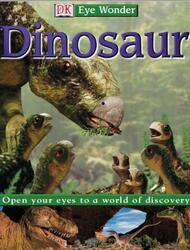

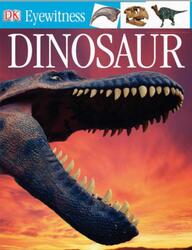
Dinosaur, Lambert D., 2010.
Long ago, strange beasts roamed the world. Some grew as big as a barn, others were smaller than a hen. Some walked on four legs, others on two. Some were fierce hunters, others were peaceful plant-eaters. These backboned land animals are called dinosaurs. Dinosaur means "terrible lizard," and like lizards, dinosaurs were reptiles. But instead of sprawling, they walked upright, and some dinosaurs had feathers rather than scaly skin. In chilly air, instead of dozing like a lizard, some dinosaurs could stay active by generating their own body heat. The dinosaurs ruled Earth for 160 million years — flourishing on land more successfully than any other group of backboned animals. Then 65 million years ago, they mysteriously died out, except for one group — the dinosaurs that we call birds.
Jurassic times.
The jurassic period lasted from around 200 to 145 million years ago. It formed the middle part of the Mesozoic Era and is sometimes called the Age of Giants because huge sauropod dinosaurs flourished at this time. By now the supercontinent Pangaea had begun to crack. Where a great rift split apart Earth's continental crust, the Atlantic Ocean formed and then widened, separating lands on either side. Moist winds from the seas could reach many inland regions, bringing rain to places that had once been deserts. It was warm everywhere. Plants began to grow in barren lands, providing food for new kinds of large and small plant-eating dinosaurs. Above these, pterosaurs shared the air with the first birds, descendants of small predatory dinosaurs. Early salamanders swam in lakes and streams, and Jurassic seas swarmed with big swimming reptiles. Many of these hunted fish that resembled some of those alive today.
Pangaea broke up into a northern landmass called Laurasia and a southern landmass called Gondwana. But these smaller supercontinents soon started breaking up as well. Laurasia started to split into the northern continents of North America, Europe, and Asia. Gondwana began splitting into South America, Africa, India, Australia, and Antarctica.
Contents.
What were the dinosaurs?.
Different designs.
Triassic times.
Jurassic times.
Cretaceous times.
The end of an era.
How do we know?.
The first fossil finds.
Little and large.
Dinosaur evolution.
Heads and brains.
Horns and head crests.
Senses and communication.
Meat-eaters.
Plant-eaters.
Long and short necks.
The backbone story.
All about tails.
Terrifying tails.
Plates and sails.
Arms and hands.
Claws and their uses.
Legs and feet.
Ancient footprints.
Tough skins.
Feathered dinosaurs.
Eggs and young.
Finding dinosaur fossils.
Rebuilding a dinosaur.
Classification of dinosaurs.
Discovery timeline.
Find out more.
Glossary.
Index.
Бесплатно скачать электронную книгу в удобном формате, смотреть и читать:
Скачать книгу Dinosaur, Lambert D., 2010 - fileskachat.com, быстрое и бесплатное скачивание.
Скачать pdf
Ниже можно купить эту книгу, если она есть в продаже, и похожие книги по лучшей цене со скидкой с доставкой по всей России.Купить книги
Скачать - pdf - Яндекс.Диск.
Дата публикации:
Теги: энциклопедия по палеонтологии :: палеонтология :: Lambert :: динозавр
Смотрите также учебники, книги и учебные материалы:
Следующие учебники и книги:
Предыдущие статьи: